Crypto Fear Index Hits Record 59-Day Streak in Extreme Fear

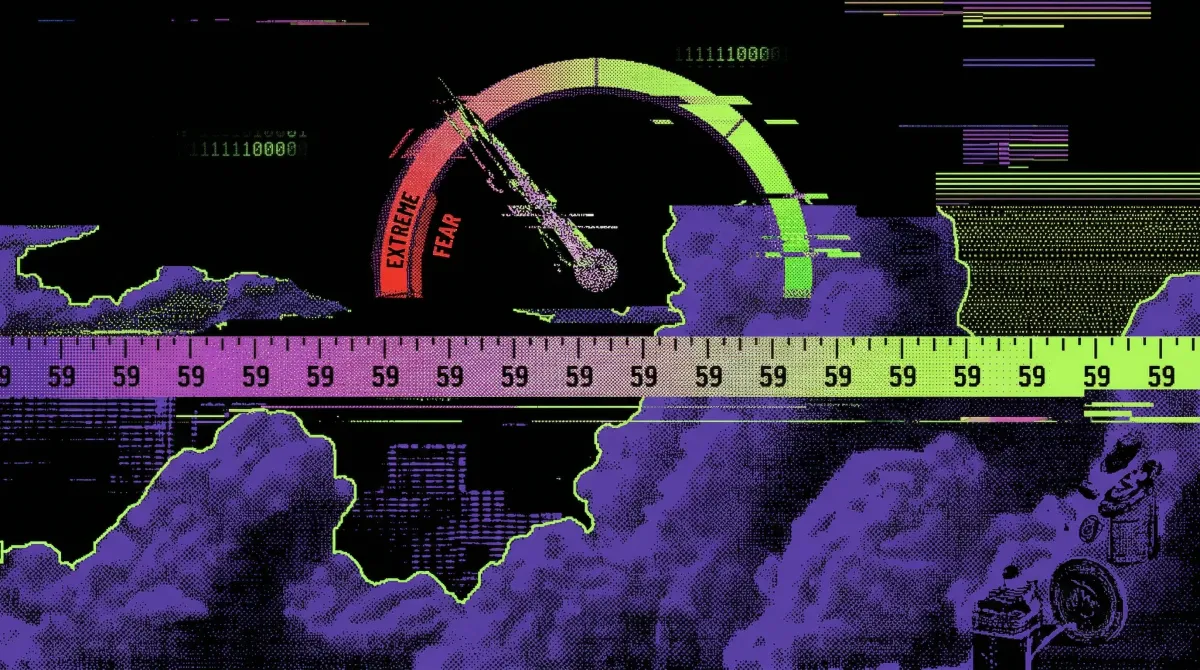
The Crypto Fear and Greed Index currently reads 8 out of 100 and has spent 59 straight days in extreme fear territory. Every previous reading this low has been followed by a rally of 150% or more, but the macro backdrop this time is different.
Quick Insights
- The Crypto Fear and Greed Index has spent 59 consecutive days in extreme fear territory, with the current reading at 8 out of 100.
- This is the longest sustained fear streak since the index launched in 2018. The previous record was set in the aftermath of the FTX collapse in late 2022.
- Bitcoin is trading near $67,600, down roughly 20% year-to-date and 46% from its October 2025 all-time high of $126,000.
- Every previous extreme fear reading in the index's history has eventually been followed by a rally of 150% or more. But those recoveries took months to years.
The Crypto Fear and Greed Index currently reads 8 out of 100 and has now spent 59 consecutive days in extreme fear territory, the longest unbroken streak since the index launched in 2018. It surpasses the periods that followed both the FTX collapse and the COVID crash.
For comparison, the index bottomed at 10 when FTX went under in November 2022, at 8 during the March 2020 market crash, and at 6 during the Terra/Luna collapse. On February 6 this year, it hit 5, which remains the all-time low.
Brief drops into single digits have happened before. What hasn't happened is the index staying there for nearly two months straight.
How the Index Works
The index is published daily by Alternative.me and pulls from six sources: price volatility, trading volume, social media sentiment, surveys, Bitcoin dominance, and Google Trends. It spits out a number between 0 and 100. Below 25 means extreme fear. Above 75 means extreme greed.
It doesn't predict price. It measures mood. But at extremes, mood has turned out to be a surprisingly useful indicator of what happens next.
Why the Market Is This Scared
There's no single trigger this time. That's part of what makes it feel different. FTX had a clear villain. COVID had a clear cause. This sell-off is the result of several things piling up at once.
Inflation hasn't gone away. Oil is back above $100. The situation in the Middle East keeps escalating. Rate cuts, which crypto has been waiting on for months, keep getting pushed back. Bitcoin is down 20% since January and 46% from its October 2025 high of $126,000. Total market cap is sitting around $2.3 trillion.
The structural damage has been real too. Over $2.6 billion in leveraged positions got wiped out in a single day during February's worst sell-off. Open interest dropped from $103 billion to $61 billion. Bitcoin spot ETFs lost $545 million in one session, and over $816 million across two days.
People aren't scared for no reason. The question is whether the fear has gone too far.
What Followed Previous Fear Lows
Every time the index has dropped into the single digits since 2018, a big rally followed. The timing and size were different each time, but the direction wasn't.
| Event | Index Low | BTC Price at Low | What Followed |
|---|---|---|---|
| Crypto winter (Dec 2018) | 10 | ~$3,200 | BTC rallied to $13,800 within 7 months (+330%) |
| COVID crash (Mar 2020) | 8 | ~$3,800 | BTC hit $69,000 within 20 months (+1,700%) |
| Terra/Luna collapse (Jun 2022) | 6 | ~$17,600 | BTC recovered to $69,000 within 18 months (+290%) |
| FTX collapse (Nov 2022) | 10 | ~$15,500 | BTC hit $40,000 within a year (+150%) |
| Current streak (Feb-Mar 2026) | 5 | ~$67,600 | TBD |
Two things are worth keeping in mind though. First, these recoveries weren't quick. The COVID bounce was the exception, a sharp V-shaped rebound within weeks. After FTX, it took close to a year before any real gains showed up. The 2018 crypto winter? Two years to fully play out. Buying during extreme fear has worked historically, but you needed patience to see it through.
Second, where Bitcoin starts from matters. When it hit extreme fear at $3,800 in 2020 or $15,500 in 2022, the upside was massive because the price had already been crushed. At $67,600, Bitcoin has fallen a long way from its highs but remains well above previous cycle lows. A 1,000% rally from here would put Bitcoin above $600,000, which requires a fundamentally different scale of capital inflow than past recoveries.
The Retail-Institutional Divergence
The Fear and Greed Index mostly captures retail sentiment, and retail has been heading for the exits. But institutional money hasn't followed.
Spot Bitcoin ETFs have taken in roughly $1.2 billion in net inflows over the past 30 days, even with the index stuck in single digits. BlackRock's IBIT pulled in over $160 million in a single session in March. On-chain data shows whale wallets have picked up around 270,000 BTC during this fear streak.
We've seen this before. In August 2024, ETF inflows stayed positive while the index sat at 17. Bitcoin went on to rally 59% over the next six months. When retail is panicking but institutions keep buying, history suggests the fear is closer to ending than it is to getting worse.
None of this guarantees anything. Institutional flows can reverse, and the macro pressures behind this sell-off haven't resolved.
Where This Goes From Here
There are two ways to read this.
History favours the buyers here. Extreme fear sustained for months, institutional accumulation running underneath the retail panic, and every prior episode ending in a rally. The case isn't that the bottom is definitely in, but that the conditions have historically rewarded people who were willing to hold through the volatility that follows.
The bear case is that the world looks different this time. Previous crashes had triggers that came and went. A pandemic that led to stimulus. An exchange blowing up. A stablecoin failing. Those were shocks that the market absorbed and moved on from. What we're dealing with now is more persistent: inflation that won't quit, energy prices climbing, and a geopolitical situation that could get worse before it gets better. The fear might be sticking around because the reasons for it are sticking around.
Neither side is wrong. The data is clear that buying during extreme fear has historically outperformed buying during greed, and today's reading is lower than anything the market has seen before. Whether that makes this the opportunity of the cycle or a reason to stay cautious is something each person has to weigh for themselves.
- The index climbing back above 20-25 has historically marked the point where the worst selling pressure is over. That shift from extreme fear to regular fear has been a more reliable signal than trying to call the exact bottom.
- Bitcoin spot ETF flows remain the clearest window into institutional conviction. If those turn negative for a sustained period, the bull case weakens considerably.
- Oil prices and rate cut expectations are the key macro variables. A drop in energy costs or a shift in central bank language would remove one of the main drivers of the current fear.
- On-chain metrics like the MVRV Z-Score (currently around 1.8) suggest Bitcoin is not yet in deep-value territory by historical standards, though it is well below overheated levels.
59 days of extreme fear. It's never lasted this long. History says what usually follows. The macro picture says maybe not yet. Both can be right at the same time.


