SEC to Permit Tokenized US Stock Trading on Crypto Venues This Week

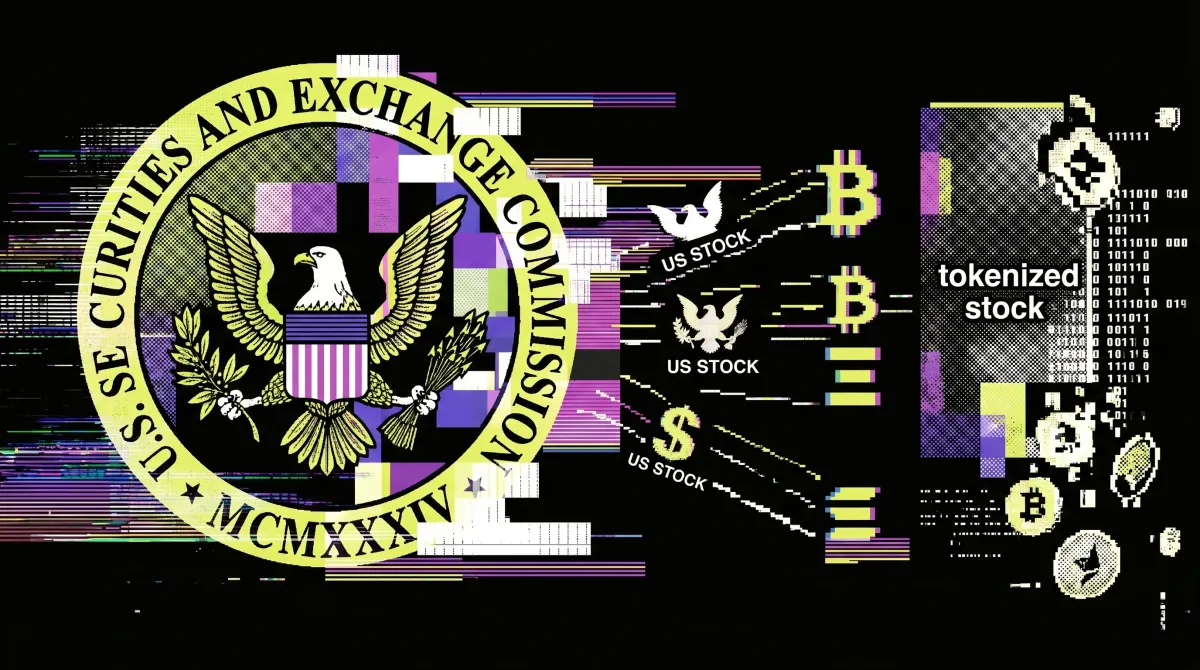
The SEC is preparing to publish an innovation exemption this week that would allow crypto-native platforms and DeFi protocols to trade tokenized versions of US stocks under temporary, lighter-touch regulation. It is the most consequential securities policy shift of the Atkins era so far.
Quick Insights
- The SEC is expected to publish an "innovation exemption" for tokenized stocks as early as this week, allowing crypto-native platforms to trade digital US equities under lighter regulatory requirements.
- Tokens could be issued without the consent of the underlying public company, and would not necessarily carry voting rights or dividends, according to Reuters reporting.
- The exemption follows SEC approvals of Nasdaq's tokenized equity rules in March and NYSE's in April, which kept tokenisation within the traditional market structure. The new framework targets crypto-native and DeFi venues directly.
- Tokenized stocks currently represent only $1.45 billion of the roughly $33.5 billion tokenized real-world asset market, a 4.3% share that the SEC framework could materially expand.
The Securities and Exchange Commission is preparing to publish an "innovation exemption" for tokenized stocks as early as this week, in what would be the most consequential securities policy shift since Paul Atkins took over as Chair last year. The framework, first reported by Bloomberg, would allow crypto-native trading venues and decentralised protocols to offer tokenized versions of US public company shares under temporary, lighter-touch regulatory requirements. Crucially, the exemption is expected to permit tokens issued without the consent of the underlying company, a feature traditional exchanges have publicly opposed.
The Exemption Is the Centerpiece of Project Crypto
The proposed exemption sits inside the SEC's broader Project Crypto initiative, the regulatory programme Atkins launched in August 2025 to provide what he called "bright-line rules" for digital asset markets. Under Project Crypto's framework, the SEC has classified digital assets into four categories: digital commodities, digital collectibles (NFTs), digital tools, and tokenized securities. Tokenized stocks fall into the last category, and the innovation exemption is the mechanism the SEC plans to use to bring trading of them on-chain.
The exemption operates as a 12 to 36 month regulatory sandbox. Eligible firms can issue and trade tokens linked to public company shares without securing full broker-dealer or exchange registration, provided they meet a defined set of guardrails. Reuters and Bloomberg have reported that the framework will include exposure limits, disclosure requirements, KYC and anti-fraud protections, and time-bound conditions tied to the experimental nature of the programme.
What it does not do is reclassify tokenized stocks out of the securities regime. SEC guidance issued in January 2026 confirmed that tokenising a security does not change its legal classification. Federal securities laws still apply based on the economic substance of the instrument. The exemption provides experimental relief from specific registration requirements, not a permanent escape from securities oversight.
The Real Significance Is Decentralised Trading Venues
Earlier 2026 SEC approvals already permitted tokenized equities to trade inside traditional market structure. The Commission cleared Nasdaq's rules for tokenized equities in March, followed by similar approval for the New York Stock Exchange in April. Both venues now allow tokenized versions of select equities and ETFs to trade alongside traditional shares using DTCC's tokenization pilot infrastructure, which we covered in detail when DTCC selected Chainlink to power its Collateral AppChain earlier this month.
The innovation exemption is doing something materially different. By targeting crypto-native venues directly, the framework opens the door for spot crypto exchanges and decentralised finance protocols to offer tokenized US stocks. That is the part of the policy that traditional exchanges have publicly opposed throughout the consultation period, with warnings about diluted investor protections and unfair competition from venues operating under lighter compliance requirements.
DeFi analyst Ignas flagged the exemption as bullish for tokens including ONDO, CFG, PENDLE and HYPE, as well as lending protocols that accept tokenized collateral such as AAVE, MORPHO and FLUID. The structural read across decentralised finance is that any infrastructure capable of handling tokenized real-world assets becomes more strategically valuable once US equities can legally flow through it.
Warren and Van Hollen Have Already Pushed Back
The policy is not advancing without political opposition. Senators Elizabeth Warren and Chris Van Hollen sent a formal letter to Atkins in April expressing concern that the exemption framework would "exempt most cryptocurrencies from the securities laws" and undermine decades of investor protections. The senators requested a response by 8 May. The Warren-Van Hollen letter specifically flagged the Trump family's crypto interests as a potential beneficiary of the broader exemption agenda, which is the same political fault line that nearly derailed the Clarity Act before its Senate Banking Committee vote last week.
Industry groups including traditional exchanges have raised parallel concerns about market integrity, the potential for flash crashes in venues with thinner regulatory oversight, and the cybersecurity exposure created by allowing DeFi protocols to handle US equity trading. Whether those concerns translate into legislative pushback or limited litigation, given that the SEC is issuing the exemption through administrative authority rather than via Congress, remains to be seen.
Tokenized Stocks Are Still a Small Slice of a Big Market
The current addressable market for the policy is modest. Tokenized stocks represent approximately $1.45 billion of the $33.5 billion tokenized real-world asset market, a 4.3% share according to RWA.xyz. Tokenized US Treasuries dominate the category at 46% of total tokenised RWAs, with Ethereum (including its Layer 2s) hosting more than 60% of all tokenized RWA volume.
The SEC framework is designed to grow the tokenized stocks share materially. If crypto-native platforms can legally offer 24/7 trading of US equities with near-instant settlement, fractional ownership and DeFi composability, the long-term ceiling is the entire US equity market. The short-term ceiling depends on how restrictive the exposure limits and white-listing requirements turn out to be when the final exemption is published. The text of the order will be the actual story, and the SEC is expected to release it within days.


