Succinct Launches Zcam iPhone App to Prove Photo Authenticity

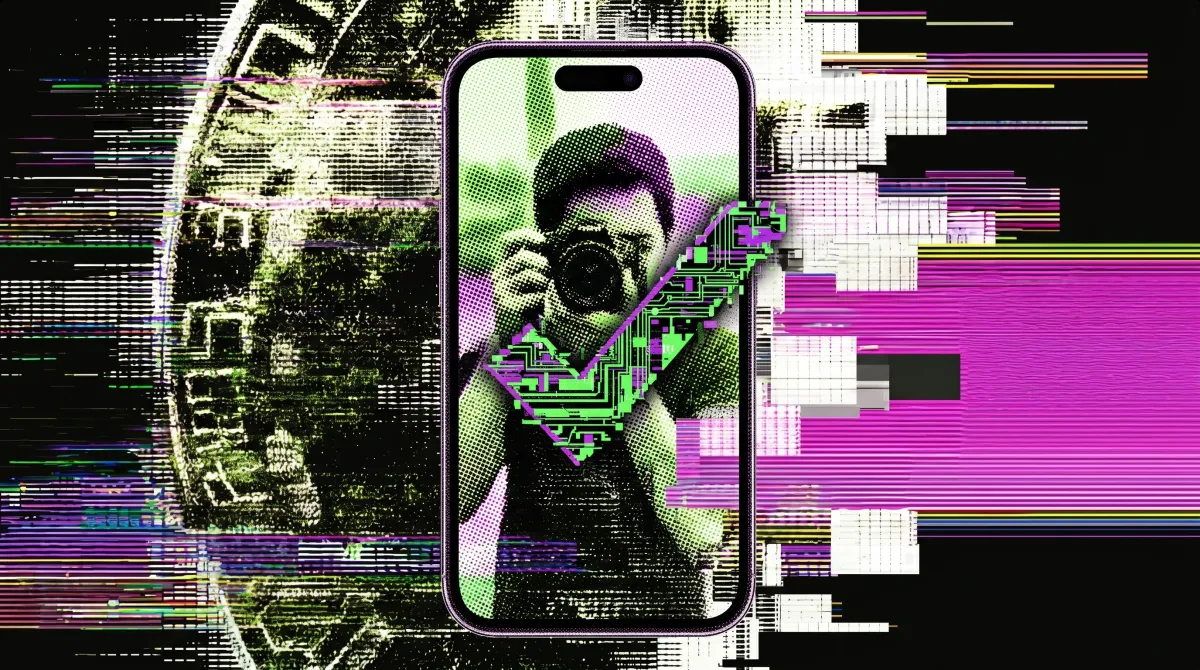
Paradigm-backed cryptography firm Succinct has launched Zcam, an iPhone camera app that signs photos and videos at capture using Apple's Secure Enclave hardware, letting anyone verify media is authentic and unaltered.
Quick Insights
- Succinct has launched Zcam, an iPhone camera app that cryptographically signs photos and videos at the moment of capture using keys generated inside Apple's Secure Enclave hardware.
- The resulting signature is embedded into each file using the C2PA open standard, allowing anyone to verify whether content came from a real device and has not been altered or AI-generated.
- The launch comes as CertiK warned Thursday that deepfakes and AI-assisted social engineering are likely to drive some of the largest crypto hacks of 2026.
- Succinct acknowledged the Zcam SDK is unaudited and not yet production-ready, and that secure enclaves have been compromised before, making fully tamper-proof capture an active area of research.
Paradigm-backed cryptography firm Succinct has launched Zcam, an iPhone camera app that signs photos and videos at the moment of capture to give viewers a way to verify content is genuine. The app is designed to tackle a problem that is becoming harder to ignore: as AI image and video generation improves, telling real media from synthetic fakes is growing increasingly difficult for both humans and automated detection tools.
Zcam works by generating a cryptographic hash from the raw pixels captured by an iPhone camera. That hash acts as a unique digital fingerprint for the file. Keys generated inside Apple's Secure Enclave, a hardware-based security module isolated from the main processor, then sign the hash. The resulting signature, along with capture metadata and device attestation, is embedded directly into the file using the C2PA standard.
The C2PA Standard Embeds a Tamper-Evident Record Into Every File
The Coalition for Content Provenance and Authenticity, known as C2PA, is a joint project established under the Linux Foundation that brings together Adobe, Microsoft, the BBC and others around a common open standard for media provenance. When content is signed using C2PA, the file carries a verifiable record of how it was created, which device or software produced it, and whether it has since been edited. That record can be checked independently without relying on the original publisher. Nikon has already shipped C2PA-compatible firmware for its Z6III mirrorless camera, targeting news agency workflows, and the standard is gaining traction across the broader media industry.
Succinct's approach puts the same capability on a smartphone. Rather than trying to detect fakes after the fact, which the company notes commercial AI detectors can easily fail to do, Zcam establishes authenticity at the point of capture. Anyone who later views a Zcam-signed file can verify it came from a real device and was not digitally altered or AI-generated.
CertiK Flags AI Deepfakes as a Top Crypto Security Threat for 2026
The launch lands on the same day blockchain security firm CertiK published a report warning that deepfakes, phishing attacks and AI-assisted social engineering are likely to drive some of the largest crypto hacks of the year. The report highlighted how attackers are using convincing synthetic media to deceive users and bypass identity checks. Deloitte's Center for Financial Services has estimated that generative AI could push total fraud losses in the United States to $40 billion by 2027, up from $12.3 billion in 2023.
The concern is not hypothetical in crypto. AI-generated impersonations of executives, fake customer support agents and synthetic KYC documents have all been used in recent attacks. Tools like World ID, which Tinder and Zoom have adopted to fight romance scams and identity fraud, tackle the problem from the identity layer. Zcam approaches it from the media layer, aiming to make the content itself verifiable rather than relying on the platform or the person sharing it.
Succinct Flags Key Limitations as Adoption Challenges Remain
Succinct has been candid about what Zcam cannot yet do. The company acknowledged that its SDK is unaudited and not production-ready, and that secure enclaves have been compromised in the past. Ensuring a fully tamper-proof process from capture to signing remains an open research problem. There is also a practical adoption hurdle: the app only creates a verifiable record when users actively choose to shoot inside Zcam rather than their default iPhone camera. For media organisations or platforms that want verified content at scale, getting users to change ingrained habits will be the harder problem to solve.
Succinct describes Zcam as an early step, with potential applications in journalism, insurance claims and identity verification. The firm raised $55 million in a Paradigm-led round in 2024 and has until now focused primarily on blockchain infrastructure, including zero-knowledge proof systems. Zcam marks its first consumer-facing product and its clearest move yet into applied cryptography for the broader AI era.


